Equipment · Hire companies · 8 states & territoriesIndependent Australian plant hire directory
Machine selector
Equipment hire · 180 suppliers

Earthmoving Equipment hire Australia

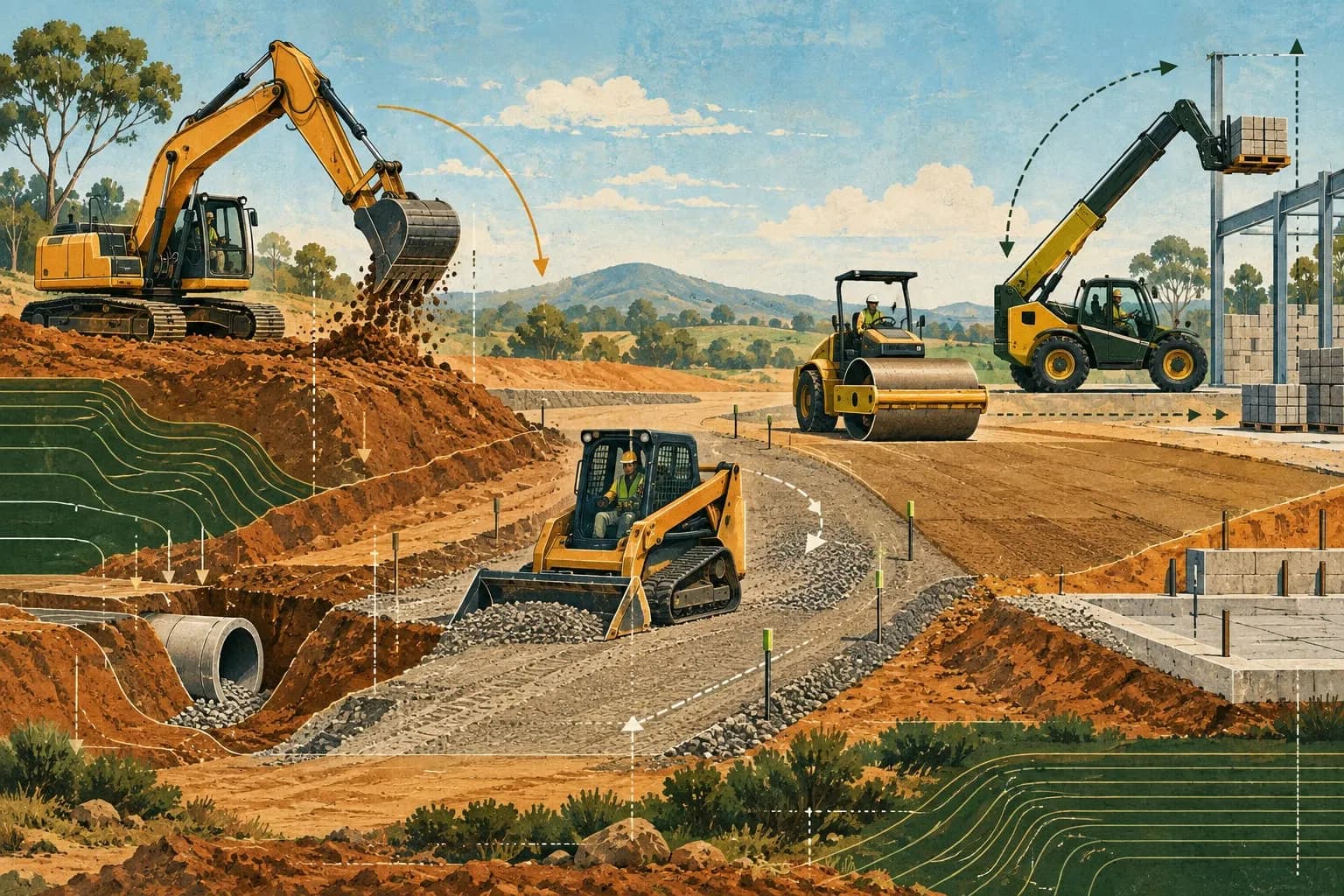
Earthmoving hire covers the machines that dig, push, load and shape ground. Output depends on digging force, cycle time, reach, haul distance and ground conditions, not only the machine's tonnage.

Specify the work

Are you digging, moving loose material or shaping the finished surface?

Build a useful equipment enquiry
Work requirementDescribeAsk the supplier
ExcavationDepth, reach and materialAsk about the bucket or attachment and spoil-loading position.
Loading and spreadingStockpile, travel and discharge pointsCompare the complete material movement, including support vehicles.
TrimmingFinished levels and acceptanceState tolerances and who checks the result.

A larger machine can lose its advantage if it cannot reach the work or must wait for trucks. Ask for a configuration against the task, rather than using nominal tonnage as the whole specification.

Read the detailed planning guide →

What earthmoving equipment can you hire?

Earthmoving Equipment Hire in Australia covers a range of machine types and sizes. These are the most commonly hired, and what each is typically used for:

MachineTypical use
Mini excavators (1–5 t)Residential footings, trenching, landscaping and tight access
Excavators (5–30 t+)Bulk excavation, detailed civil work, rock breaking with attachments
Skid steers & posi-tracksSite clean-up, levelling, material shifting, auger and broom work
Wheel loadersStockpile loading, feeding crushers and screens, yard work
Bulldozers (D4–D10)Clearing, bulk push, ripping and dam construction
BackhoesMixed trenching and loading on small civil and council jobs

Before you request a quote

A useful enquiry tells the supplier what has to be achieved, where the equipment will work and what could change the selection. Include dimensions, quantities, material conditions, dates, the delivery route, unloading area and any site compliance requirements.

Compare offers on the complete configuration: machine, attachments, operator (for wet or dry hire), transport both ways, minimum hours, fuel and return conditions. See how to read a plant hire quote.

Selection factors

Three things that change the answer.

01

Material and cut depth

Clay, shale, rock and wet fill change the machine class and attachments you need. Give the supplier dig depth, material type and volume.

02

Haul and stockpile layout

The excavator and the trucks or dumpers working with it have to cycle at the same rate. Share haul distances and where the spoil goes.

03

Access and ground pressure

Gate widths, slopes, soft ground and overhead services can rule out a larger machine before capacity matters.

Earthmoving Equipment Hire companies

180 suppliers to compare.

Filter by state →
See all 180 earthmoving equipment suppliers →
FAQ

Earthmoving Equipment hire questions.

What size excavator do I need?

For house footings and landscaping a 1.7–3.5 t mini excavator is common. Driveways, pools and services usually suit 5–8 t. Bulk earthworks and civil production typically start at 13–20 t. Size to dig depth, material and access, then confirm with the supplier.

Is it cheaper to hire a skid steer or an excavator?

It depends on the task. Skid steers are faster for levelling, spreading and moving loose material; excavators are better for digging, trenching and loading trucks. Many residential jobs hire both for a short period.

Do I need a ticket to operate hired earthmoving plant?

Operator competency and site requirements vary by state and principal contractor. Many hire companies offer wet (operated) hire if you don't have a competent operator.

Is a float or delivery included in the hire rate?

Usually not. Float delivery and collection are commonly quoted separately and priced each way, so compare them alongside the machine rate.